
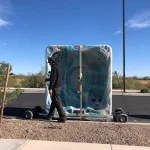


Hot tubs with built-in steps, rails, covers, or other attached accessories require extra planning because each added feature can change the unit’s dimensions, weight distribution, and handling needs. In Tucson, careful Spa Moving starts with identifying which components are permanently attached, which can be removed, and how the full unit will fit through the available access route.
A standard hot tub may already be difficult to move through gates, patios, and side yards. Accessories can make that process more complex by creating additional width, height, or protruding sections that must be protected during relocation.
Why Do Attached Accessories Matter During a Spa Move?
Attached accessories matter because they can affect both clearance and balance.
A handrail extending from one side of the hot tub may reduce how easily the unit fits through a narrow gate. Built-in steps can make one side heavier or change the best lifting points. Cover lifters may extend beyond the main cabinet and create additional clearance issues around walls, fencing, or landscaping.
Experienced Spa Movers usually evaluate these features before the unit is lifted. The goal is to understand the complete footprint of the hot tub rather than measuring only the main shell or cabinet.
Can Built-In Steps Stay Attached During the Move?
It depends on how the steps are constructed and connected to the hot tub.
Some steps are fully separate and can simply be moved independently. Others may be integrated into a surrounding platform, attached to the spa cabinet, or connected to nearby decking.
If the steps can be safely removed, moving them separately may simplify the relocation. This can reduce the overall width of the hot tub and make tight access areas easier to navigate.
If the steps are permanent or structurally integrated, Hot Tub Movers need to account for them in the moving plan. They may affect how the unit is tilted, supported, or positioned on moving equipment.
What Happens With Handrails and Grab Bars?
Handrails and grab bars should be inspected before the move begins.
Some are removable, while others are secured directly to the hot tub or surrounding deck. A removable rail can often be detached before relocation to reduce the chance of bending, impact, or clearance problems.
If a rail remains attached, movers must consider how far it extends from the spa and whether it changes the unit’s center of balance.
Small accessories may appear insignificant, but even a few additional inches can matter when moving through a narrow side yard or gate.
How Are Cover Lifters Handled?
Cover lifters are another common consideration during Spa Moving.
These systems may include brackets, support arms, or frames mounted to the spa cabinet. Depending on the design, they may need to be detached before the hot tub is moved.
Leaving a protruding cover mechanism in place can make the unit wider and increase the risk of contact with walls, fences, or other obstacles.
The spa cover itself is usually handled separately. Removing it can make the unit easier to access and helps prevent unnecessary stress on the cover during transport.
Why Should Accessories Be Inspected Before Moving Day?
Inspecting accessories ahead of time helps identify what needs to be removed and what tools may be required.
Property owners should note any components connected to the spa, including:
- Steps
- Handrails
- Cover lifters
- Side shelves
- Drink trays
- Surround panels
- Entertainment mounts
- Decorative trim
- External storage attachments
This review is especially important if the spa has been customized over time. A hot tub that originally had a simple installation may now include features that change how it must be moved.
A professional Hot Tub Moving Service can evaluate these added components along with the access route before relocation begins.
Can Accessories Affect the Moving Route?
Yes. Even when the main hot tub fits through a gate, an accessory may prevent the full unit from clearing the opening.
For example, a handrail might extend several inches beyond the spa cabinet. A cover lifter could create additional height or width. Built-in steps may interfere with turning space near a wall or corner.
For Tucson properties with block walls, narrow side yards, gravel landscaping, or tight backyard access, these details can make a significant difference.
Spa Movers should measure the full unit as it will actually be moved, not just the manufacturer’s basic spa dimensions.
What If an Accessory Is Connected to the Deck or Patio?
Accessories that are connected to surrounding structures require careful separation before the hot tub can be moved.
A spa may sit beside a custom deck, platform, privacy wall, or built-in seating area. In some installations, steps or rails are attached to these surrounding structures instead of the spa itself.
The connection points should be identified before any lifting begins. Trying to move the hot tub while an accessory is still attached to the deck or patio can create unnecessary strain on both the spa and the structure.
This is why the entire installation area should be inspected rather than focusing only on the hot tub.
How Does Weight Distribution Change With Accessories?
Accessories can affect the way the hot tub is balanced during relocation.
Even lightweight items may change how the unit sits on moving equipment if they extend beyond the main cabinet. Heavier integrated features can make one side more difficult to support or maneuver.
Professional Hot Tub Movers consider both the overall weight and how that weight is distributed. The objective is to keep the unit stable while it is lifted, tilted, or moved across the property.
Should Accessories Be Reattached Immediately After the Move?
Not always.
The hot tub should first be placed securely in its final location. Once the unit is properly positioned, removable accessories can be reinstalled if appropriate.
This sequence helps avoid having extra components interfere with final placement. It also makes it easier to verify that the spa is sitting correctly before adding steps, rails, or cover hardware back into place.
Plan for the Entire Hot Tub, Not Just the Cabinet
Moving a hot tub with built-in steps or attached accessories requires more than measuring the main shell. Every connected feature can affect clearance, handling, and final placement.
Property owners in Tucson should identify all attached components before moving day and make sure the full unit can travel through the planned route. When access is limited or the installation includes multiple accessories, having the layout reviewed in advance can help make the relocation more organized and predictable.